
Digging in the Dirt: ToE Mines Recycled Sound
UK-based ToE is a project of experimental guitarist and synthesist Sean Wood. He’s produced a half-dozen RBR albums, the first several with longtime friend Ian Johnson (now departed). From the start, ToE has taken a low-tech approach to sound generation. Early albums employed lo-fi effects and basic recording methods, creating an industrial ambience that sounded much larger. Subsequent projects tapped into synthesis of the early digital age. Mining, maximizing and optimizing simple tools has been a theme, and each ToE project is a fresh departure from those before it.
This philosophy reminds me of Apollo 13 or, more personally, my efforts to solve home improvement challenges using miscellaneous scrap materials sitting in the garage for years. I inherited this approach from my grandfather, who constructed toys and practical (or impractical) household amenities from miscellaneous junk. It’s old-school thinking, harkening to an era of scarcity. Working amid tight constraints forces a certain kind of creativity that flows against modern currents, which give us more stuff, more technology, and more possibilities than we can ever fully utilize.
ToE’s newest album, re: Construction, takes this approach to the next level. It’s a technological journey inward, slicing and dicing past recordings and crafting them into new compositions.
Specifically, the project focuses on two vintage pieces from early ToE releases: “1951,” the opening track of their self-titled first album, and “Transmission 9” from Way Out. Wood went into the audio files, then sliced, diced, extracted, manipulated and refocused the sounds into alternate versions. Recycling the sounds produces wildly different results. In his words:
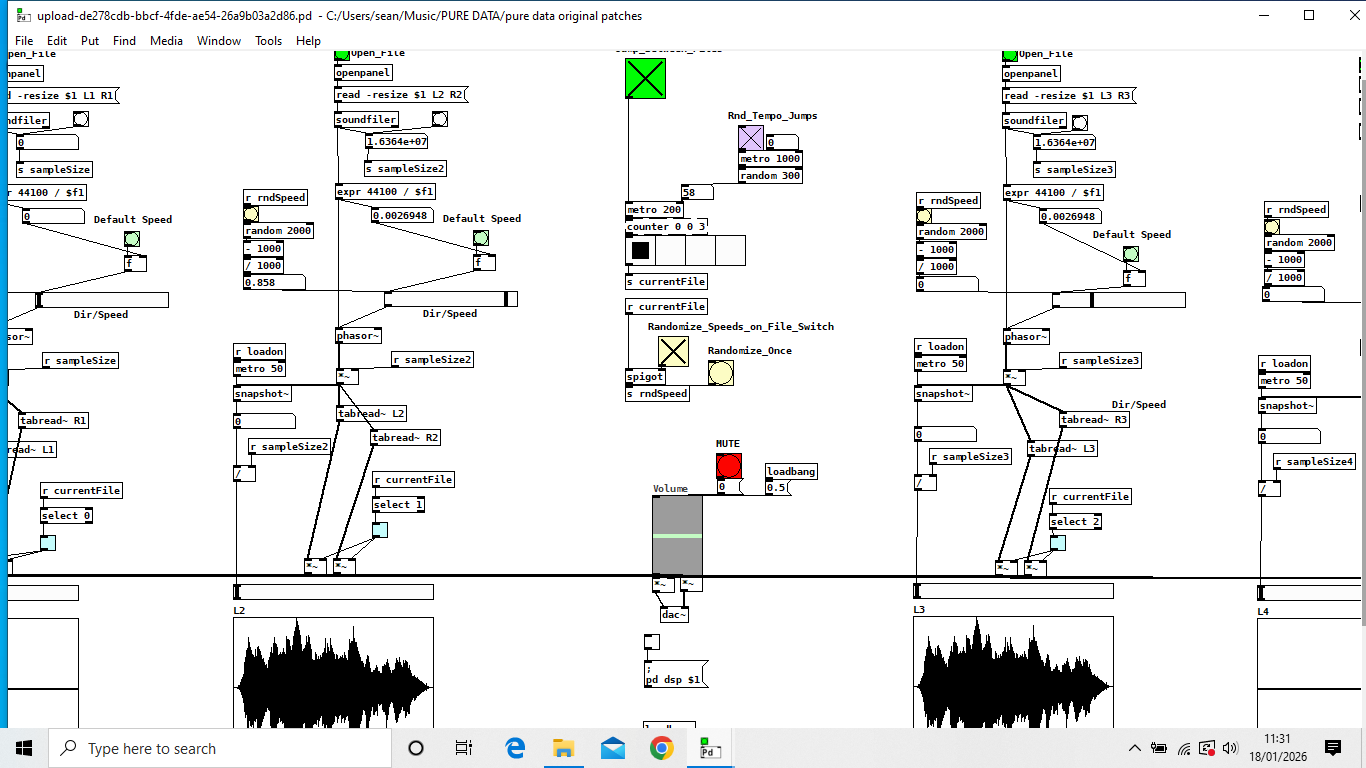
“I started getting into experimenting with patches created in Pure Data (which is a code-based modular audio software) but patches using audio files as the source rather than synthesis.
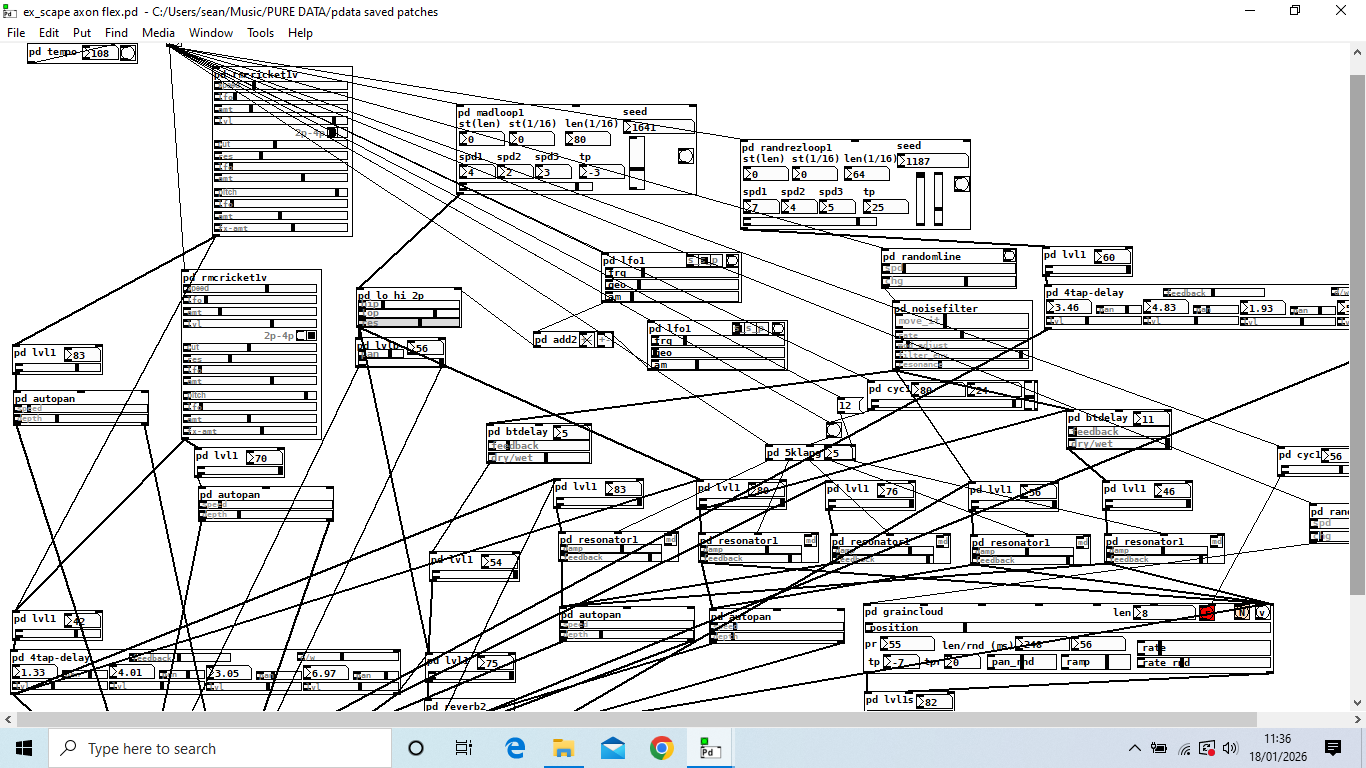
“I liked the idea of reconstructive random generative parameters within the patches chain signals as making Euclidean rhythm patches is a staple of my sound fields… essentially shoving audio through random generators of all kinds (filters, distortion, grain delay, reverbs, modulation, resonators)… where the source audio is the DNA for the end result and creates a unique output. The patches are very random in generative application and are all designed primarily as live performance patches which all of these songs are (live, improvised).”
He shared the following screenshot depicting the project’s sound processing:
And this one:
The album includes two extended recyclings of each of the pieces, as well as the originals. This allows us to compare and marvel at the power of reconstruction.
Learn more about ToE here.